

The “No buts,” Presidency
How the First Term Forged the Second
We have always believed that two of the most important presidential qualifications, beyond character, are the ability to discern good advice from bad and the skill to manage a myriad of competing, high-stakes projects.
No president can be a subject matter expert on everything. That is why they rely on a cabinet—which includes 15 secretaries, the Attorney General, and the Director of National Intelligence—to provide that essential, grounded expertise.
Our military experience taught us a valuable rule we call the "But, Sir." When given an order, you were typically allowed to offer one alternative or question its execution. One "but, sir" might be accepted; most likely, it would not. After that single objection, however, a second "but, sir" was considered arguing, and the consequences were rarely positive.
We bring this up as we feel President Trump learned this lesson in reverse during his first term. He appointed qualified cabinet officials who, presumably, gave him advice he didn't want—they offered a few "but, sirs."
It became clear that, perhaps more than most, Donald Trump does not like to be told "no."
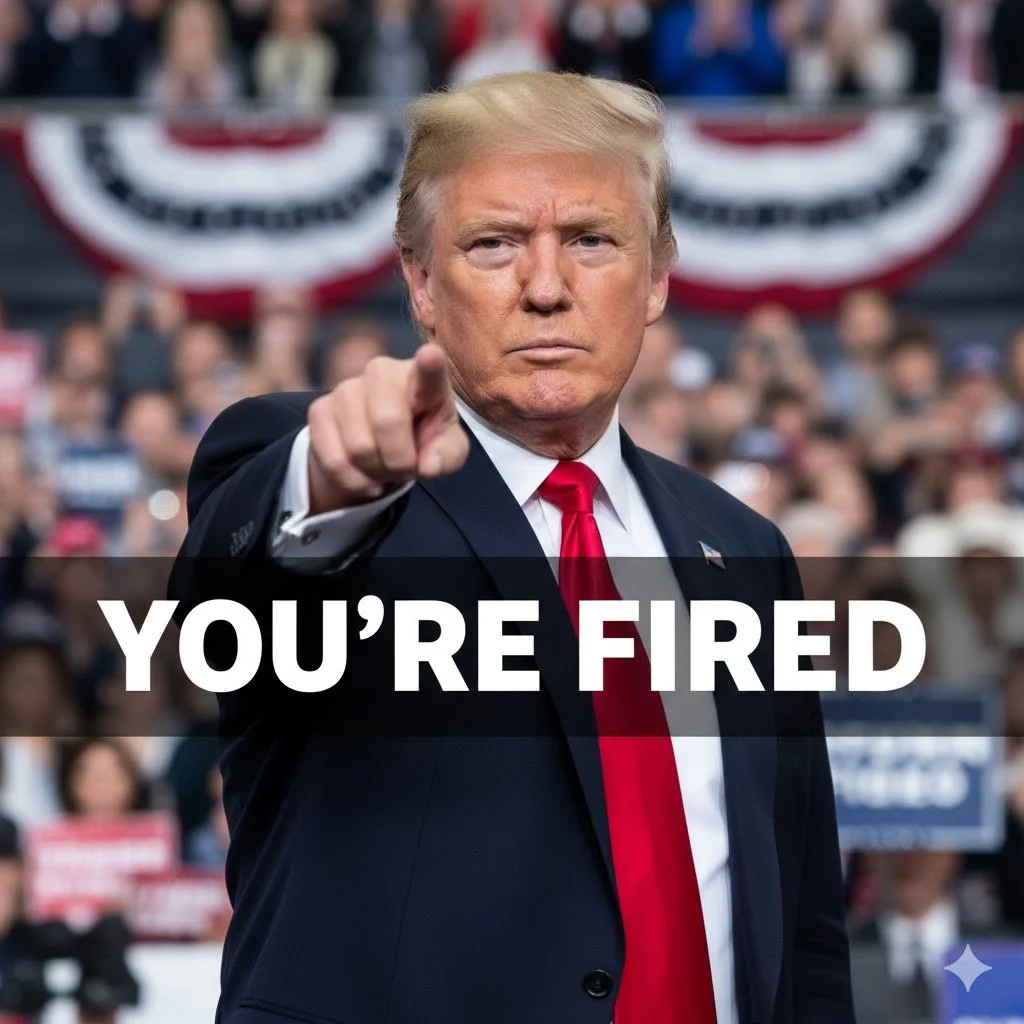
Consequently, he fired those qualified individuals. The turnover rate was staggering. Of the 15 members of his original cabinet, 9 were replaced at least once. The number of firings in other key positions, like White House Chief of Staff and Director of National Intelligence, was similarly high.
As we observe his second administration, it appears President Trump learned two defining lessons from that experience, which he is now applying.
Lesson 1: Loyalty is the Only Qualification
The primary characteristic of the cabinet and top officials in this second administration is not experience or qualifications; it is personal loyalty to the president.
Many appointees lack the traditional background for their incredibly important and wide-ranging positions. [As we detail in another article,] they share one qualification that supersedes all others: they can be counted on to do what they are told.
This is a cabinet where "but, sirs" are not allowed.
This approach also serves a secondary purpose: it neutralizes any internal threat, however remote, of the 25th Amendment (allowing the removal of a president). After multiple calls to invoke it during his first term—an action that requires the Vice President and a majority of the Cabinet—this new, hand-picked team is unlikely to ever challenge the President's fitness, regardless of the provocation.
Lesson 2: The Federal Workforce is the "Deep State"
The second lesson President Trump learned was a deep and abiding dislike for the federal workforce, which he frequently equates with the "Deep State."
While most on the far right define the "deep state" as a more shadowy, ill-defined group, President Trump generally uses the term to refer to the entire federal civil service. Rather than viewing these career employees as non-partisan staff doing the country's work, he sees them as a bureaucratic monolith that is not personally loyal to him and, as such, works at cross-purposes to his agenda.
This explains the sustained effort to fire, dismiss, and encourage as much of the federal workforce as possible to leave. It was / is not about the traditional conservative goal of saving taxpayer money or making government more efficient; it is about removing those he deems disloyal and replacing them with those that are. And to be clear, he apparently considers everyone in government that he did not appoint, to be disloyal.
In our opinion, President Trump is unconcerned with the size or cost of government, so long as it is loyal directly to him.