The Great Moral Divergence - This is no longer about Politics.
-
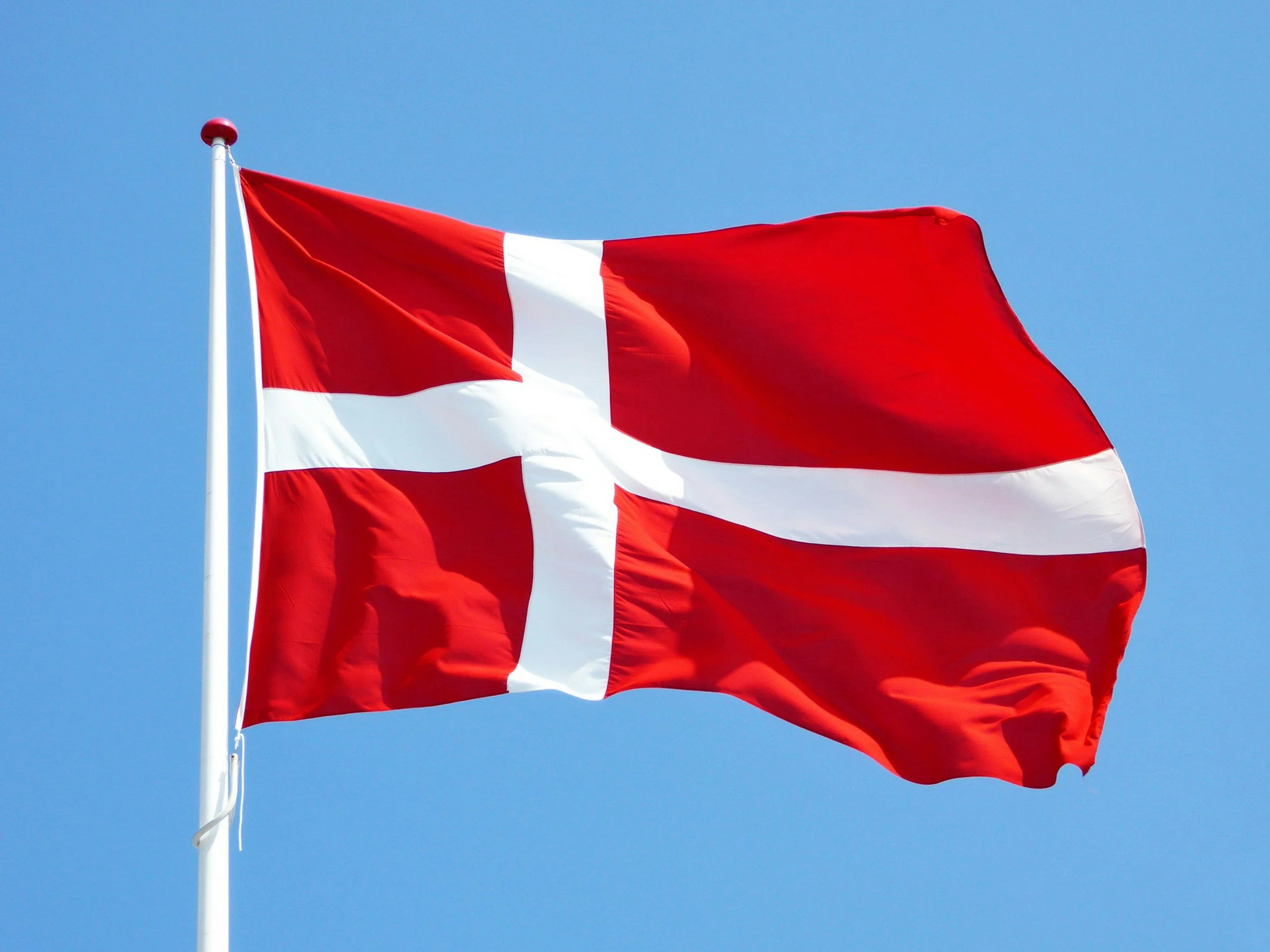
![Flag of Denmark]()
Til det danske folk
Et åbent brev til det danske folk fra en pensioneret amerikansk officer
(Jeg skrev dette på engelsk og fik det derefter oversat til dansk. Undskyld eventuelle fejl eller upræcist sprog, da oversættelsessoftware, selvom den er fantastisk, ikke er perfekt).
Som pensioneret oberstløjtnant i den amerikanske hær med 23 års tjeneste – herunder næsten et årti i NATO – deler jeg dette brev for at ære vores alliance.
Jeg forsøgte at få dette udgivet i Berlingske og Information, men de kunne ikke imødekomme mit behov for anonymitet. Denne anonymitet er nødvendig for at beskytte min familie mod professionelle og økonomiske repressalier i det nuværende politiske klima i USA. Da budskabet om vores fælles historie og ære er for vigtigt til at blive tiet ihjel, vælger jeg at udgive det her.
Vi husker Operation Bøllebank. Vi husker Helmand. Vi husker vores ord.
————————————————-
Jeg skriver til jer som amerikansk statsborger og pensioneret officer med treogtyve års tjeneste i det amerikanske militær, herunder næsten et årti i NATO-alliancen. Jeg skriver for at udtrykke min dybe respekt for jeres nation og min harme over den idiotiske og uinformerede ringeagt, der i øjeblikket er rettet mod en af vores mest betroede allierede.
Jeg sender dette brev anonymt på grund af en frygt for professionelle og økonomiske repressalier. I det nuværende politiske klima er selv pensionerede officerer i stigende grad sårbare over for målrettet forfølgelse for at ytre kritik. Det faktum, at en veteran med mange års kamperfaring føler sig tvunget til at skjule sin identitet, mens han udtrykker venskab over for en NATO-allieret, er lige så sigende for den nuværende politiske situation i USA som selve den retorik, jeg her skriver for at undskylde.
Vær venligst opmærksom på, at de nedværdigende bemærkninger vedrørende jeres robuste demokrati, jeres militær og erhvervelsen af Grønland ikke repræsenterer det amerikanske folks hjerte. For os, der mener, at amerikansk ære er uadskillelig fra vores ords integritet, er det afskyeligt at se et årtusindes dansk historie reduceret til en ejendomshandel, forstærket af den fornærmende og demeaning retorik, der i øjeblikket er rettet mod jeres nation. Danmark er en sofistikeret partner og en suveræn ligemand – ikke et strategisk aktiv, der skal "erhverves" eller gøres til genstand for drillerier i skolegården.
I løbet af mine treogtyve års tjeneste stod jeg på samme jord som danske soldater. Fra koldkrigsøvelserne i REFORGER til sandet i Desert Storm og de komplekse, farlige gader i Somalia og Bosnien, så jeg på nærmeste hold det danske militærs professionalisme. I Bosnien så vi, hvordan danske kampvognssoldater fra Jydske Dragonregiment under Operation Bøllebank demonstrerede deres tapperhed. Vi har ikke glemt de ofre, I ydede i Afghanistan, hvor jeres nation led det højeste tabstal pr. indbygger af alle NATO-allierede.
At se denne fælles historie mødt med drillerier er et dybt forræderi mod de mænd og kvinder, som jeg tjente sammen med. Vi husker, at danske kvinder kæmpede og døde som ligemænd – soldater som overkonstabel Sophia Bruun fra Gardehusarregimentet, der gav sit liv i Helmand. De blødte for en fælles tro på en stabil verden, ikke for transaktionel gevinst.
Jeg beder jer om ikke at give op over for os. Båndet mellem vores nationer – styrket i det sidste århundredes udfordringer – forbliver ubrydeligt i hjerterne på dem, der virkelig forstår værdien af vores alliance. Vi er chokerede og vrede over adfærden hos "nogle" i vores regering. Vi husker jeres historie, vi værdsætter jeres suverænitet, og vi ærer jeres tjeneste.
Med den største respekt og solidaritet,
En pensioneret amerikansk officer og NATO-veteran
Tags: #dkpol, #dkforsvar, #OperationBøllebank, #veteraner
-
![]()
The Great Moral Divergence: Why This Is No Longer About Politics
For years, we have described the tension in American life as a political divide. We speak of it in the familiar vocabulary of the "back and forth"—the tug-of-war between Democrats and Republicans over tax rates, the reach of liberal social policies, or the merits of conservative fiscal restraint. This is the healthy, albeit messy and oft times painful, heart of a functioning democracy. But as a conservative moderate, I have come to a sobering realization. What we are witnessing today is not a political disagreement. It is a fundamental divergence in morality.
The Distinction Between Policy and Character
It is possible to look at the broad goals of the current administration and see the outlines of legitimate conservative concerns. There are arguments to be made regarding border security, economic sovereignty, and the frustrations of those who disagreed with the trend to the left, in various areas, over the last decade. In a vacuum, these are topics for healthy debate.
However, the current vehicle for these goals is a President and Administration defined by bullying, narcissism, and a "shoot first, gain the facts, then lie to support a false narrative" style. Their use of slander, insult, and threats as the primary tool of governance is appalling. When we see key cabinet officials and Congressmen—individuals who should be servants of the people—transformed into henchmen driven by a mixture of blind loyalty and the fear of personal destruction, we have moved past "politics as usual." We are seeing the abdication of the basic moral roles required to sustain a republic.
The Paradox of the 75 Million
The most unsettling aspect of this era is not the existence of an entitled individual who disregards constitutional norms; history is littered with such figures. The true concern lies with the 75 million Americans who look at this behavior and see either a political savior or, at the very least, a preferable alternative to a Democrat—any Democrat.
Just as alarming, if not more so, are the almost 90 million eligible US voters who simply either didn't care enough to get off the couch or just shrugged their shoulders and did not vote. If only a small fraction of that number—less than 2%—had gone to the polls and voted for Kamala Harris, the US and the rest of the world would have been spared this abomination of "government."
Many of these individuals are people we know to be generally decent neighbors, friends, and family members. This creates a cognitive dissonance that is difficult to resolve. How can "decent" people support a leader who openly mocks the foundations of human decency and the rule of law?
A Different View of Morality
The epiphany is this: we are no longer operating from the same moral map. Those who support this administration are not necessarily "bad" people, but they have adopted a morality that is fundamentally different from the traditional sense of the word. They are willing—even happy—to excuse despotic behavior and anti-constitutional rhetoric. Even though our country’s lean to the left was accomplished through democratic processes, they dislike the outcome so much they want it changed through either the democratic process or an authoritarian one. Apparently, to them, the method does not matter.
In their view, the "norms of decency" are a luxury with which they no longer concern themselves. They see a world where illegal immigrants, students receiving loan forgiveness, and various minority communities are "getting a good deal" at their expense. To them, their leader's depravities are a secondary concern—or even a necessary weapon—if it promises to upend a system they believe has not worked for them.
The Cost of the Trade-Off
This is the crossroads where we find ourselves. On one side is a belief that the ends justify any means, including the dismantling of constitutional guardrails and the celebration of cruelty. On the other side is the belief that without the norms of human decency and the integrity of our institutions, we have no country left to save.
Choosing a leader who views the Constitution as an obstacle and his critics as "scum" is not a "political" choice. It is a moral one. Until we address this underlying shift in what we value as a society, no shift in tax policy or border regulation will bridge the gap that has opened between us.
A Warning from History
We must be clear about the bargain being made. History is a cold, unforgiving teacher to those who believe they can trade democratic principles and basic morality for the sake of political expediency. We have seen this path taken before in other nations, and the consequences were unfailingly tragic.
To abandon our character for the sake of "winning" is a betrayal of our hard-won American heritage. It is beneath the dignity and reputation of a nation that was, for nearly a century, the world's most trusted ally and a beacon of democratic stability. If we continue to sacrifice our values on the altar of grievance, we will find that we have not only lost our way—we have lost the very essence of who we were as a nation.
-
![Man sitting on boat]()
War Crimes - The Hard Reality
The facts of the September 2nd incident off the Venezuelan coast are now brutally clear, stripped of the political spin that sought to hide them. On that day, a US military drone struck a small wooden vessel suspected of smuggling narcotics. The initial blast destroyed the boat, leaving two survivors clinging to the burning wreckage in the open ocean. Instead of a rescue operation, a second strike was ordered. A second missile was fired, vaporizing the men in the water.
This was not a chaotic firefight in a jungle ambush; it was a calculated execution of shipwrecked survivors.
The chain of command for this decision appears to stretch from the very top of the Pentagon to the control room floor. Reports indicate that Secretary of Defense Pete Hegseth issued a verbal directive to "kill everybody" associated with these interdictions. That order was reportedly operationalized by Admiral Frank Bradley, commander of U.S. Special Operations Command, who directed the "double tap" strike. Finally, the order landed with a drone operator or weapons officer who pulled the trigger, knowing their target was no longer a threat.
Through the lens of Just War Theory, this operation fails on every moral and legal level. Let's talk some Latin for a bit:
First, consider Jus ad bellum (the morality involved in the decision to go to war). The United States is using high-tech military weaponry to perform a law enforcement function. Drug interdiction is the realm of the Coast Guard and police, governed by due process and criminal law. Using Hellfire missiles against wooden boats in international waters obliterates the line between policing and warfare, treating suspected criminals as enemy combatants. We are militarizing a crime problem, using a hammer where a pair of handcuffs is required.
Second, and more damning, is the violation of Jus in bello (morality in the conduct ofwar). Even if we accept the administration's "war on narco-terror" narrative, the laws of war are absolute regarding those who are 'hors de combat' (out of the fight). Someone clinging to debris in the ocean is no longer a threat. To summarily execute them is a violation of the Geneva Conventions and the basic rule of the sea. It is the military equivalent of shooting a wounded suspect who has already dropped their weapon.
From a pragmatic standpoint, the "kill them all" strategy is also a tactical failure. Dead men provide no intelligence. By vaporizing the survivors, we destroyed the only potential sources of information regarding supply routes, cartel leadership, and distribution networks. A captured smuggler is an asset; a vaporized one is just a statistic.
Apologists will argue, "They were drug dealers, they poisoned our kids, they deserved it." But that is not how civilized nations operate. We do not execute suspected criminals on the street, and our military does not execute surrendered enemies on the battlefield. The moment we decide that "suspected guilt" justifies summary execution, we have abandoned the rule of law for the rule of force.
We must also understand there are constraints in war that are not just about civilized conduct, but about mutual survival. If we abandon these constraints, we invite a cycle of retaliation that endangers every American in uniform. As we stare down a potential conflict with Venezuela, this danger moves from theory to reality. If we normalize the killing of survivors in the water, we forfeit the right to outrage if anything similar is done to our service members.
Bottom Line: This was a war crime, plain and simple. The only remaining question is one of accountability. Who goes to jail? Is it Secretary Hegseth for issuing an illegal directive? Is it Admiral Bradley for translating that directive into a kill order? Or is it the service member who followed an unlawful order? If history—and the Nuremberg principles—are any guide, the answer must be "all of the above."
-
!['No to Bullying' sign]()
Chronicle of Cruelty
We all have bad days. None of us want to be remembered for the things we might have said or done while at our absolute worst. That said, unless Donald J. Trump lives every single moment at his worst, we are forced to ask: what type of individual, having lived his whole life in positions of wealth and power, feels the need to belittle, insult, or otherwise just be cruel to so many of his fellow countrymen?
Our goal at The Pragmatic Patriot is to observe, analyze, and comment on the actions of our leaders. But with this President, that obligation feels less like journalism and more like wading through sewage with a teaspoon. The sheer volume of his intolerable conduct toward others seems intended to overwhelm our capacity for outrage.
If we were to stop and write a dedicated piece every time Donald Trump said something disgusting, dehumanizing, or insulting, this website would cease to be about politics. It would be exhausting. It would require numerous posts, every day, just to keep up with the insults hurled at reporters, the threats against institutions, and the casual embrace of authoritarianism.
So, with this, we admit - his fondness for cruelty exceeds our ability—and tolerance—to write about it.
We often ask ourselves: if we were fans of his politics, and if we hated the opposition as much as the right hates the left, could we then stomach his conduct? Could we make excuses for him, as his supporters do daily?
We are happy to report the answer is a resounding "no."
There is a concept known as cognitive dissonance—the mental discomfort experienced when holding two conflicting beliefs or values simultaneously. Many of us here trend toward the conservative side of the political spectrum. On paper, we should be fans. We should be able to support many of his policies (but not the thuggish execution of those policies).
We don’t. We can’t.
The reason is simple: We expect civil behavior from our friends, neighbors, and co-workers. We certainly expect it from the man who represents all of us to the rest of the world. We aren't asking for "political correctness." But we do want a President who is not a combination of the cruelest traits of the worst people we have ever known—magnified tenfold. We don't think that is asking too much.
We understand his supporters like his politics. We do not, and will never understand, why they accept—and even celebrate—his conduct.
While we can’t waste any more brain cells writing about his daily abuses, we hope that Americans do not become numb to them. The past few weeks of this term have served as a stark reminder that holding the highest office in the land for the second time has not humbled the man; it has made him worse.
Our commentary on his character ends here. But read on if you want a reminder of just a few of the things our President has said or done, both recently and over the last few years. We've separated these into two categories: the specific, venomous attacks aimed at individual human beings, and the broad, dangerous political statements that threaten democratic norms.
—————————————————
The Personal Bully
"Quiet, Piggy" (November 14, 2025): Aboard Air Force One, when Bloomberg reporter Catherine Lucey attempted to ask a substantive question, President Trump pointed a finger in her face and snapped, “Quiet. Quiet, piggy.” It was a moment of breathtaking, juvenile nastiness.
Berating the Press in Front of Foreign Leaders (November 18, 2025): Before the shock of the previous incident could register, he topped it. While sitting in the Oval Office with Saudi Crown Prince Mohammed bin Salman, Trump launched a tirade against ABC News correspondent Mary Bruce. Under the gaze of a foreign leader, Trump called the American reporter a “terrible person,” declared her network “fake news,” and explicitly threatened to revoke ABC’s broadcast license—a direct assault on the First Amendment. In the same breath, he dismissively waved away the brutal murder of journalist Jamal Khashoggi by Saudi agents, saying, “Things happen.”
Targeting General Mark Milley (September 2023): Trump suggested that the retiring Chairman of the Joint Chiefs of Staff, Gen. Mark Milley, had committed treason for simply giving reassurance to another nuclear power (China) during the chaos of the Trump transition. Donald ‘J’ stated that in times past, his actions would have been punishable by DEATH!
Attacking Court Staff (2023-2024): During his various civil and criminal trials in the interim between terms, Trump repeatedly attacked judges, prosecutors, and even low-level court clerks by name on social media, unleashing waves of death threats against civil servants just doing their jobs.
Mocking Paul Pelosi (2023-2024): On the campaign trail, Trump repeatedly made jokes and mocked the violent hammer attack on Paul Pelosi, the 82-year-old husband of former Speaker Nancy Pelosi, drawing laughter from crowds over an act of near-deadly political violence.
Mocking a Disabled Reporter (2015): During a rally, Trump mocked New York Times reporter Serge Kovaleski, who suffers from arthrogryposis (a condition limiting joint movement). Trump jerked his arms and contorted his hands in a grotesque imitation of Kovaleski's disability while sneering, "You ought to see this guy: 'Uhh, I don't know what I said, I don't remember!'"
The Political Bully
Humiliating Allies in the Oval Office (February 2025): Shortly after taking office, Trump and Vice President Vance "dressed down" Ukrainian President Volodymyr Zelensky during an Oval Office meeting. He berated Zelensky for being an "obstacle to peace" and temporarily cut off U.S. intelligence sharing and weapons deliveries, a move that shocked European allies and emboldened Russian advances.
The "Vermin" Speech (November 2023): In language directly mirroring past dictators, Trump pledged on Veterans Day to “root out the communists, Marxists, fascists and the radical left thugs that live like vermin within the confines of our country,” deliberately dehumanizing his political opponents to pave the way for extreme measures against them.
"Poisoning the Blood" (December 2023): At a campaign rally, Trump invoked white supremacist ideology, stating that immigrants are “poisoning the blood of our country.” Despite public criticism that his comments echoed sentiments made by Adolf Hitler in Mein Kampf, Trump doubled down on the phrase repeatedly.
Threatening a "Bloodbath" (March 2024): While discussing economic policy, he warned if he were not returned to power, it would be a “bloodbath” for the whole country—rhetoric critics saw as a signal intended to normalize political violence.
Calling for Termination of the Constitution (December 2022): In a Truth Social post continuing his election denial lies, Trump explicitly suggested that his grievances allowed for “the termination of all rules, regulations, and articles, even those found in the Constitution.”
Pardoning the January 6 Insurrectionists (January 2025): Upon taking office for his second term, he immediately moved to pardon individuals convicted of violent attacks on the U.S. Capitol, cementing his re-framing of domestic terrorists as "patriots" and "hostages."
Is this a complete list? Hardly. We barely scratched the surface. But we are tired of writing about Trump's conduct, and you are likely tired of reading about it. Yet, we must force ourselves to remember. The moment we stop being exhausted by his behavior is the moment we must acknowledge that we are no longer the country of our forefathers. We risk losing the identity of a nation that, even when not always liked, was always respected and emulated. If we accept this as normal or desirable, we have well and truly become... something else.
-
![Justice is blind - Statue]()
The Department of Justice?
For nearly 50 years, an essential barrier has stood between the President of the United States and the Department of Justice. Known as the "firewall," it was not a law written in the Constitution, but a set of binding norms and strict policies designed to ensure that justice in America remained blind to partisan politics.
Today, under the second Trump administration, that firewall has not just been breached—it has been dismantled. In order to understand what we have lost, we must first correct the record on how we got here.
Myth vs. Reality: Did Biden "Order" the Prosecutions?
A pervasive narrative on the far-right claims that Donald Trump’s legal troubles were orchestrated by Joe Biden—that the President picked up the phone and ordered his Attorney General to "get Trump."
This claim is not just false; it is a projection of how Trump views the presidency, not how his predecessors viewed the office. The reality is that Joe Biden respected the firewall to a fault, often frustrating his own base with his refusal to interfere.
The "Hands-Off" Approach: President Biden’s Attorney General, Merrick Garland, was so committed to the appearance of neutrality that he delayed investigations for over a year, arguably moving too slowly to avoid looking political.
The Special Counsel Buffer: When investigations into Trump heated up, the Biden DOJ didn't hand them to a political appointee. They appointed Jack Smith, an independent Special Counsel, specifically to remove the White House from the decision-making loop.
The Silence: Unlike Trump, who regularly chants "Lock her up" or calls for the prosecution of enemies, the Biden White House maintained a disciplined silence on pending cases, adhering to the strict post-Watergate norms that forbid the President from commenting on criminal matters.
Trump Was Prosecuted Because He Broke the Law. A Lot.
Donald Trump wasn't prosecuted because of a conspiracy; he was prosecuted because of his conduct. The "firewall" doesn't protect you from your own crimes.
The sheer volume of evidence presented to grand juries—made up of regular citizens, not politicians—was overwhelming. Trump was indicted not for being a Republican, but for specific, tangible acts that would have landed the rest of us in prison:
Willful Retention of National Defense Information: He didn't just take classified documents; he allegedly hid them, defied subpoenas to return them, and showed them to people without clearance.
Obstruction of Justice: He ordered subordinates to destroy evidence and lie to investigators.
Conspiracy to Defraud the United States: He coordinated a fake elector scheme to overturn a certified election.
These were not "policy disagreements." They were felonies. The system worked exactly as it was supposed to: the DOJ followed the facts, not orders from the President.
The Real Breach: What Is Happening Now (2025)
While Biden respected the firewall, President Trump has made shattering it a central plank of his second term. He adheres to the "Unitary Executive Theory"—the view that the President has absolute authority to direct the DOJ.
The "Firewall" has now effectively collapsed in three visible ways:
1. Weaponized Prosecution The defining feature of the firewall was that the White House could not order the prosecution of political rivals. That norm is gone. We have now seen the DOJ move to indict high-profile political opponents, including former investigators, signaling that the department is now an instrument of retribution.
2. Partisan Protectionism Conversely, the firewall was meant to prevent the President from shielding his allies. In 2025, we have witnessed the DOJ abruptly drop inquiries into political allies while purging career prosecutors who raised ethical objections. The message to the federal workforce is clear: loyalty to the President outweighs the facts of a case.
3. The Purge of Independent Watchdogs Perhaps the most structural damage has been the systematic firing of Inspectors General (IGs). These internal watchdogs were the "fire alarms" of the Executive Branch. By removing them, the administration has blinded the public to what is happening inside the agencies.
The Bottom Line
The "firewall" was never a physical wall; it was a handshake agreement between power and restraint. It relied on a President who believed that the integrity of the law was more important than his own political survival.
We are now living in a new era where the Department of Justice operates without that restraint. The legal authority for this exists—the President does control the Executive Branch—but the moral authority of impartial justice has been a casualty of this consolidation of power.
-
![Rain-splattered glasses]()
How does the Far Right / Far Left / Moderates see the world?
We recently saw a thread on Reddit that inspired this breakdown of three political viewpoints: the far right, the far left, and we moderates. Is this a simplification? Of course. But we think it captures an essential truth.
The Far Right
Based on observations, the far right's political focus isn't on "kitchen table" issues. The cost of groceries, the Administration’s spending on golf, Qatari Jumbo Jets, rising healthcare premiums, or the performance of their 401(k)s—these topics don't seem to be their primary drivers.
Instead, their energy appears focused on punitive outcomes for others. The list is less about personal gain and more about ensuring others are penalized: deporting immigrants, restricting transgender rights, eliminating "woke" initiatives, blocking student loan forgiveness, curtailing SNAP benefits, and repealing Obamacare, to list just a few.
The Far Left
The far left, in contrast, is concerned with federal spending and tax cuts for the wealthy. Their worldview seems driven by a desire for positive outcomes for marginalized groups—immigrants, the LGBTQ+ community, the poor, and the environment.
The problem lies not in the desire but in the perceived disregard for the cost. Someone must pay, or some other group must sacrifice, for these "good things" to happen. The far left, it seems, is more than willing for society at large to make those sacrifices, whether through significantly higher taxes, accepting what many see as unfair competitive imbalances in sports, or other major societal shifts.
The Moderates
This brings us to moderates. We share the far left's unhappiness with wasteful spending and tax breaks for the wealthy. We also share their desire for "good things" to happen to others.
The difference is our focus on how those things are obtained and at whose expense. We believe in "Yes, but..."
Yes, immigration is a net good, but our borders must be secure.
Yes, the LGBTQ+ community should live freely, but not at the expense of the fundamental rights of others.
This leads to the constant drumbeat for higher taxes. Perhaps if we felt our local, state, and federal governments were spending our money wisely, we might feel differently. As it stands? Fuhgeddaboudit.
-
![Vice Presidential Seal]()
From Pence to Vance - A Study in Contrasts
The Vice Presidency is an office bound by a solemn oath to support and defend the Constitution. The events of January 6, 2021, transformed that oath from a formality into a defining test of character. The actions of the man who held the office then, Mike Pence, and the stated intentions of the man who holds it now, J.D. Vance, reveal two fundamentally different understandings of that duty.
Mike Pence: A Stand for Constitutional Order
An Indiana native with a law degree, Mike Pence’s career followed a traditional conservative path: from talk radio host to a six-term Congressman who rose to chair the Republican Conference, and finally to Governor of Indiana. As Vice President, he was a steadfastly loyal number two, instrumental in advancing the administration's conservative social policies.
That loyalty was put to the ultimate test on January 6, 2021. In the preceding weeks, President Trump waged an intense public and private pressure campaign, insisting Pence had the unilateral authority to reject certified electoral votes. Had Pence complied, he would have plunged the nation into an unprecedented constitutional crisis. The Supreme Court would almost certainly have ruled against him, affirming the Vice President’s role is purely ceremonial, but not before profound chaos was unleashed.
Despite being called a "wimp" and a "coward" by the president for his refusal, Pence issued a formal statement on January 6th declaring his allegiance to the constitution. As a violent mob stormed the Capitol - some calling for him to be hung - Pence was evacuated. He later returned to a secured chamber to fulfill his duty, presiding over the certification that affirmed a peaceful transfer of power.
J.D. Vance: A Challenge to the Constitutional Order
J.D. Vance’s rise was less conventional. A U.S. Marine Lance Corporal and Iraq War veteran, he graduated from Ohio State and Yale Law School. During the 2016 election, Vance was a fierce critic of Donald Trump, privately musing that Trump might be "America's Hitler."
By the time he ran for the Senate in 2022, Vance had completed a dramatic political reversal, becoming one of Trump's most aggressive defenders. This "America First" posture has defined his vice presidency, highlighted by a tense Oval Office meeting where he publicly confronted Ukrainian President Volodymyr Zelenskyy over U.S. aid.
When asked how he would have handled January 6th, Vance has been unequivocal: he would have refused to certify the election and sent the slates of electors back to the states. This position is particularly striking given that Vance has taken an oath to the Constitution on at least three separate occasions: as a Marine, as a U.S. Senator, and as Vice President.
His stance aligns with a broader challenge to established norms. In February, he argued that federal judges should not be able to overrule a president, stating, "Judges aren't allowed to control the executive's legitimate power." This open disregard for the Constitutional principle of judicial review, combined with his stated intent for January 6th, presents a vision of executive power far removed from the one his predecessor chose to defend.
-
![Confused Dog]()
Now it makes sense...or does it?
A visiting neighbor — firmly ensconced in the 6 percent of “dedicated conservatives” — recently informed me, after a marathon viewing of the sly propaganda network, that those “darn” Democrats (language softened for our younger readers) were still shutting down the government.
I agreed, technically speaking, that they were. Then I asked if he knew why. He did not. The network, it seems, had offered so many competing narratives that even its most devoted viewers were left bewildered (but mad as heck!).
To help clarify, I offered a short accounting. While the Administration has been energetically spending:
- Roughly $4 trillion to extend the 2017 tax cuts to the most affluent among us,
- $40 billion to bail out Argentina,
- Up to $1 billion to retrofit a Qatari jumbo jet to Air Force One standards (soon to be just a display at the Trump Library),
- $300 million to demolish the East Wing of the White House and construct a new ballroom,
- $230 million to compensate the President for legal bills / pain and suffering caused by various, err - legal difficulties,
- $200 million to purchase and upgrade two Gulfstream G700s for Secretary of Homeland Defense Kristi Noem, and
- About $30 million (and counting) since inauguration for the President’s golf outings
It has found itself unable, or unwilling, to extend Affordable Care Act subsidies or restore Medicaid funding for our nation’s less fortunate citizens. Which, as it happens, is precisely why those “darn” Democrats have refused to reopen the government.
My neighbor, I should note, is almost certainly either partially covered by Medicaid himself, or has family whose well-being depends on it. Still, after a moment of consideration, he seemed content with the $4 trillion addition to the national debt, the foreign bailout, the billion-dollar aircraft, the ballroom, the legal windfall, the private jets, and the golf tab — provided only that the ‘darn’ Democrats stop thwarting the will of Donald J. Trump, and allow the government to function.
You just can’t make this stuff up.
-
![Historical flintlock pistol with wooden handle and metal barrel on a black background.]()
The Second Amendment: What Did the Founders Really Intend?
The Second Amendment to the Constitution, ratified in 1791, contains the 27 most fiercely debated words in the Bill of Rights:
"A well regulated Militia, being necessary to the security of a free State, the right of the people to keep and bear Arms, shall not be infringed."
Today's debate is polarized—you're either passionately pro-gun,* anti-gun, or trying to stay out of the crossfire. Regardless of your position, it’s crucial to ask: Why do we have a Second Amendment? What was on the minds of the Founders when they added it to the Bill of Rights?
We can assure you it wasn't about self-defense or hunting. In 1791, those activities were a given, a part of daily life. The Founders were wrestling with a much larger fear, born from their recent victory over the British Empire; the threat of a powerful, centralized standing army on their own soil.
Their new Constitution was a masterclass in checks and balances—pitting the legislature against the executive, the judiciary against both, and the states against the federal government. The Second Amendment was forged in this same fire of mistrust toward concentrated power.
To understand their intent, we look to the "Federalist Papers," the essays written to champion the Constitution's ratification.
In Federalist No. 29, Alexander Hamilton argued for a "well-regulated militia" under federal authority. He saw an armed and trained citizenry as the primary means of national defense, eliminating the need for a large, permanent, and potentially dangerous professional army. He dismissed fears that a president could use the militia of one state to oppress another, believing it to be a practical impossibility. We’re guessing Hamilton was better at rap than at fortune-telling.
In Federalist No. 46, James Madison presented the other side of the coin. He argued that armed state militias would serve as the ultimate check on the power of the federal government itself. Should a future president become tyrannical, Madison envisioned these militias as a formidable deterrent to federal overreach. Strike two on the founding fathers.
From this history, a few key points become clear:
The primary motivation was to provide for national defense without a large standing army.
The secondary motivation was to create a check on federal power through state militias.
The foundational arguments from the authors of the Constitution never mentioned individual self-defense or hunting as the purpose of this amendment.
Now, consider our current reality. We have the most powerful and expensive standing military the world has ever known. This fact alone makes the first and primary purpose of the Second Amendment, as envisioned by the Founders, obsolete. And the idea that a state militia (National Guard) could serve as a meaningful check on the active military is, frankly, a fantasy.
Our Bottom Line: Here at The Pragmatic Patriot, we are not anti-Second Amendment. We are for common sense, historical understanding, and responsible citizenship. We believe in the right to own firearms. But having seen firsthand the carnage caused by modern weaponry—carnage that has been turned against schoolchildren time and again—we say enough is enough.
It is time for the far left and far right to get off the stage and for moderates to find a way forward.
*We want to clarify terminology. In the military, firearms are not called guns; they are called weapons. This is more than just jargon - it reflects a solemn purpose. A weapon is a tool of combat, and its function is not fun or sport. Although we have all left the service, we carry that distinction with us to this day.
-
![Pinocchio]()
The truth (or something close) would be nice!
Lies and exaggeration are the last refuge of a failed argument. When politicians lean on these tactics, they're not just misleading the public; they're sending a clear signal that their own platform is too weak to stand on its own.
Think of it this way: a sound political argument is like a well-built structure. It stands on a solid foundation of facts, logic, and sound principles. It can withstand scrutiny, welcome questions, and endure the winds of debate. A weak argument, however, is structurally unsound. It requires constant props and scaffolding—in the form of hyperbole, misdirection, and outright falsehoods—just to keep from collapsing.
This approach forces us to ask a critical question: If the truth were on your side, why would you need to invent an alternative? A confident position welcomes the truth; a fragile one fears it.
This isn't merely poor debating; it's a corrosive practice that degrades our entire political discourse. It treats voters not as citizens to be persuaded with reason, but as a crowd to be manipulated by fear and fiction. Ultimately, a solid argument doesn't require deception for a simple reason: the facts, on their own, are always enough.
-
![Cover of a manual titled 'Manual for Courts-Martial United States' featuring a gold scale of justice on a black textured background with gold corner accents and an illustration of the American flag.]()
If it's good for the Goose...
One of the President's most significant constitutional responsibilities is serving as Commander in Chief of the Armed Forces. In this role, the President holds immense power, governing the careers of all service members and controlling the nuclear briefcase, which contains the codes for authorizing a nuclear launch.
The military personnel under his command are held to a rigorous legal and ethical standard outlined in the Uniform Code of Military Justice (UCMJ). The UCMJ contains dozens of punitive articles that define offenses and their punishments. A notable example is Article 133, "Conduct Unbecoming an Officer and a Gentleman," a broad provision designed to enforce a high standard of personal and professional integrity.
Actions that can fall under this article include:
- Dishonesty, such as making false official statements or cheating.
- Acts of indecency or cruelty.
- Unfair dealing or lawlessness.
- Public intoxication and disorderly conduct.
- Extramarital Conduct (also covered under Article 133)
For a military officer, a conviction under the UCMJ is devastating, often resulting in the end of their career and potentially imprisonment at the U.S. Disciplinary Barracks in Fort Leavenworth, Kansas. This raises a critical question about accountability: while our uniformed leaders face severe, career-ending consequences for misconduct, their civilian leadership within the Department of Defense and the White House are not held to the same legal standard.
-
![donkey and elephant]()
Sticks & Stones
A friend visiting from out of state recently had a visceral reaction when we discussed places we might like to live in retirement. I mentioned one particular state, and they recoiled, stating they could never live there because it was “full of Democrats.”
That comment jarred me, as it’s a reflection of an increasingly hostile national tone. We hear reports of the President wanting to unleash the military on "Democrat-run cities" and purge federal employees who work in areas that lean blue. Just this week, the President’s Press Secretary, Karoline Leavitt, claimed that the Democratic Party's main constituency is comprised of "Hamas terrorists, illegal aliens, and violent criminals." Seriously?
While American politics has never been for the faint of heart, this rhetoric feels dangerously over the top. It brings to mind a line from the movie Remember the Titans: “Attitude reflects leadership.”
Where does this dialed-up hostility come from, and more importantly, where is it taking us? When leaders encourage citizens to view half the country as an enemy within, history shows it has never led anywhere good.
-
![scrabble truth]()
Want the truth? Join the Military.
In the United States military, where integrity and honor are paramount, lying is a punishable offense. Service members who make false statements can face a range of disciplinary actions, from administrative reprimands to a court-martial, which can result in imprisonment and a dishonorable discharge. Members of Congress, on the other hand, regard lies to the general public as protected free speech under the first amendment.