

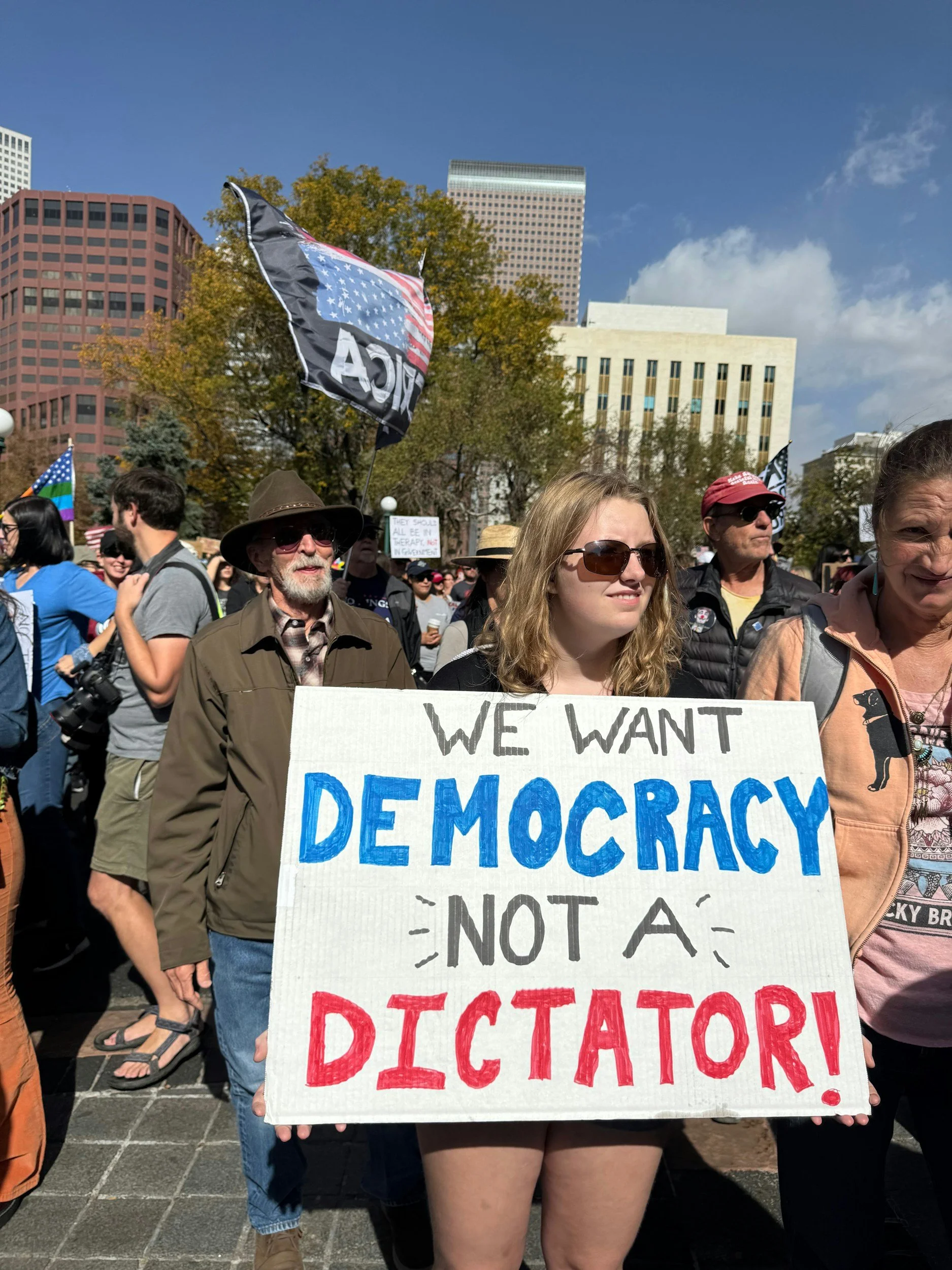
When Loyalty Replaces Country
Whenever anyone compares modern American politics to 1930s Germany, it is usually a pointed partisan attack. It triggers instant defensiveness and reprisals. But history is a mirror, not a weapon. If we want to understand the psychological trap of modern political loyalty, we must look honestly at how authoritarianism actually works—where it differs from our current reality, and where the parallels are too precise to ignore.
The Crucial Differences
Let’s be intellectually honest. Donald Trump is not Adolf Hitler and the MAGA movement is not the Nazi Party.
Ideology vs. Transaction: Hitler operated on a rigid, deeply coherent, and murderous racial ideology. Trump is a populist who operates on branding, transaction, and personal grievance.
The Scale of Intent: Hitler’s explicit goal from day one was global military expansion and systemic genocide. Trump’s focus is domestic isolationism, personal power, and reshaping trade and immigration policies.
The System: Hitler dismantled a fragile German republic in a matter of months. Trump operates within a 250-year-old constitutional system that has, in most cases, at least attempted to resist efforts to subvert the framework set forth by our founding fathers.
Dismissing the comparison on these grounds is fair. But it misses the actual mechanism of danger. The threat isn't that the identities of the men are the same; it’s that the nature of the loyalty they demand is identical.
The Strongman Playbook: Narcissism and Scapegoats
Where the two leaders genuinely overlap is in how they view themselves, their targets, and their political opponents.
The Engine of Narcissism: Both men exhibit a profound, absolute narcissism that blends their personal ego with the destiny of the nation. To them, any criticism of their person is treated as treason against the state, and any personal victory is framed as a victory for the people. They position themselves as the sole, messianic savior of a broken nation ("I alone can fix it").
The Necessity of an External Scapegoat: A populist movement cannot exist without an outside target to blame for every economic, cultural, and political problem. Hitler directed Germany's post-WWI despair toward a single, catastrophic scapegoat: the Jews. Trump uses this exact same mechanism, focusing national anxieties onto specific groups—predominantly illegal immigrants, while frequently training his rhetoric onto Hispanics, Somalis, and Muslims as the primary source of American decline.
The Deconstruction of Legitimate Opposition: In a functioning democracy, political rivals are fellow citizens with different ideas. To a strongman, they are an existential threat. Hitler demonized democratic leaders as the "November Criminals" who "stabbed Germany in the back." Trump replicates this strategy completely. He routinely describes Democrats not as Americans with different viewpoints, but as "scum" and the "enemy from within." He acts as the leader of one specific faction, treating more than half the country as domestic hostiles.
The Friction with Allies
This internal demand for dominance naturally spills over into foreign policy, creating a distinct pattern in how both leaders treat international partnerships. Traditional alliances are built on shared values, predictable commitments, and mutual consultation. Strongmen, however, view international relations strictly through a lens of transaction and friction.
Historically, Hitler routinely blindsided his closest ally, Mussolini, launching massive military invasions (like Poland and the Soviet Union) with zero warning or coordination. He expected immediate solidarity afterward, while privately and publicly belittling Italy's contributions. Trump replicates this pattern of erratic, unilateral behavior. He insults and threatens long-standing democratic allies, minimizes their historic contributions to American security, and blindsides them with sudden foreign policy shifts—yet expects them to snap to attention at his whim.
The Dangerous Parallel: The Switch from Cause to Person
The ultimate warning from 1930s Germany isn't about policy; it’s about the psychological shift from supporting a cause to worshipping a person. In August 1934, the German government changed the standard oath taken by soldiers and civil servants. For generations, they had sworn allegiance to the constitution and the fatherland. The new text changed that fundamentally. They swore a personal vow of unconditional obedience to Adolf Hitler himself.
This personal oath created a fatal psychological trap. For Hitler's disciples, loyalty became absolute. As the war dragged on, Allied bombs leveled German cities and total ruin became completely undeniable, but the inner circle and the radicalized base refused to pivot. Why? Because when you swear allegiance to a person rather than a principle, admitting that person is wrong means admitting your entire worldview—and your own identity—is a lie. So, they followed him all the way over the cliff to total disaster.
The Modern Trap
This is the exact trap visible in the MAGA movement today. It has transitioned from a political movement about conservative principles—fiscal restraint, free markets, and constitutional originalism—into a movement where the single definition of "patriotism" is absolute loyalty to one man.
If a leader can change his policy positions multiple times in the same sentence, rewrite conservative orthodoxy, and demand that the reality of a global event or a legal ruling be ignored, his followers are no longer citizens engaging in politics. They have become disciples who will never disagree or break ranks, no matter what he does.
True patriotism is exemplified through respect to the Constitution, the rule of law, and the country. It is never exemplified through loyalty to a single, flawed human being. When you cannot question, disapprove, or criticize the leader (or any of his actions), you haven't saved your country—you've surrendered it.