The Faces of Moderation within the Democratic Party
-
![2025 logo for the Democratic party]()
Introduction
Over the next few days, The Pragmatic Patriot will introduce some Democratic moderates we feel embody the spirit of NATION before party. Certainly not all will agree with us and we welcome your input. We’re going to run these ladies and gentlemen up the flagpole for your consideration. Tell us what you think.
In today's highly polarized political climate, moderate Democrats are essential for moving the country forward. They are not just compromise-seekers; they are bridge-builders who prioritize pragmatic results and electability over strict ideology.
These centrist Democrats focus on tangible achievements and common-sense solutions that appeal to a wide range of voters, especially in competitive districts. Their approach is characterized by:
Fiscal responsibility.
Commitment to a strong national defense.
Focus on everyday issues like affordability and community safety.
Their ability to secure major policy wins, such as infrastructure investments, is crucial for showing that Democrats can govern effectively. This rising centrist bloc is key to building a broad, winning coalition and ensuring the party's future success.
-
![Image of Jared Golden (D-ME)]()
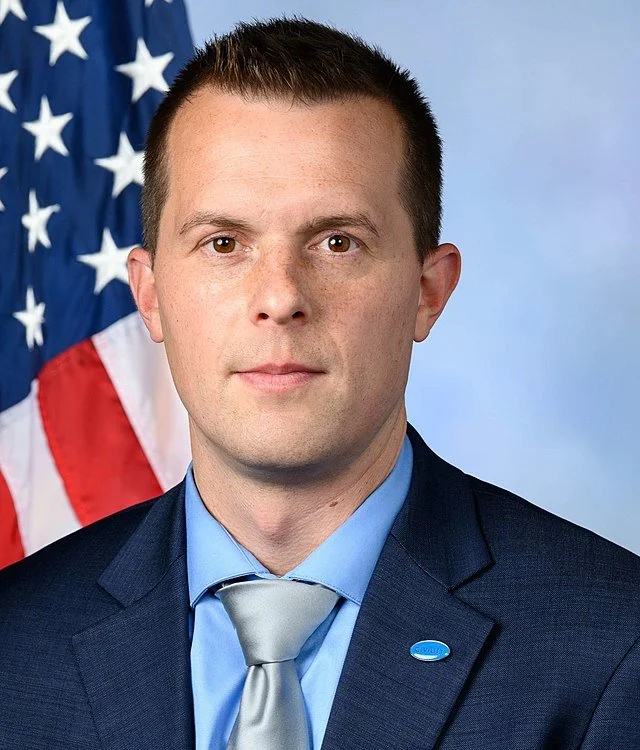
Jared Golden
Jared Golden, representing Maine's 2nd Congressional District, is widely regarded as one of the most independent and moderate members of the House. A Marine Corps veteran who served in Iraq and Afghanistan, Golden represents a vast, rural district that often leans conservative, which has heavily influenced his "Blue Dog" Democratic platform.
Golden's reputation for bipartisanship is institutional. He is a prominent member of the Problem Solvers Caucus, a group evenly divided between Democrats and Republicans dedicated to finding common-ground solutions. He has also been a co-chair of the Blue Dog Coalition, a caucus of fiscally conservative and moderate Democrats.
His voting record provides the clearest evidence of his independent streak, as he frequently breaks with his party on high-profile legislation.
Key examples of his moderate stances include:
Border Security: He voted for the "Secure the Border Act" (H.R. 2), a Republican-led immigration and border enforcement bill that was unanimously opposed by most other Democrats.
Student Loans: He voted with Republicans to overturn President Biden's student loan forgiveness program.
Police Reform: He was one of only two Democrats to vote against the "George Floyd Justice in Policing Act," citing concerns about its provisions on qualified immunity.
Economic Policy: In a notable break, Golden has been a rare Democratic supporter of tariffs, a position that aligns him more with the previous administration's trade policies than with his own party's leadership.
Unfortunately we will not have Golden in Congress much longer. Representative Golden just announced (NOV 25) he would not seek re-election, citing frustration with the "unproductive Congress" and the partisan gridlock that led to the recent shutdown.
-
![Image of Mark Kelly]()
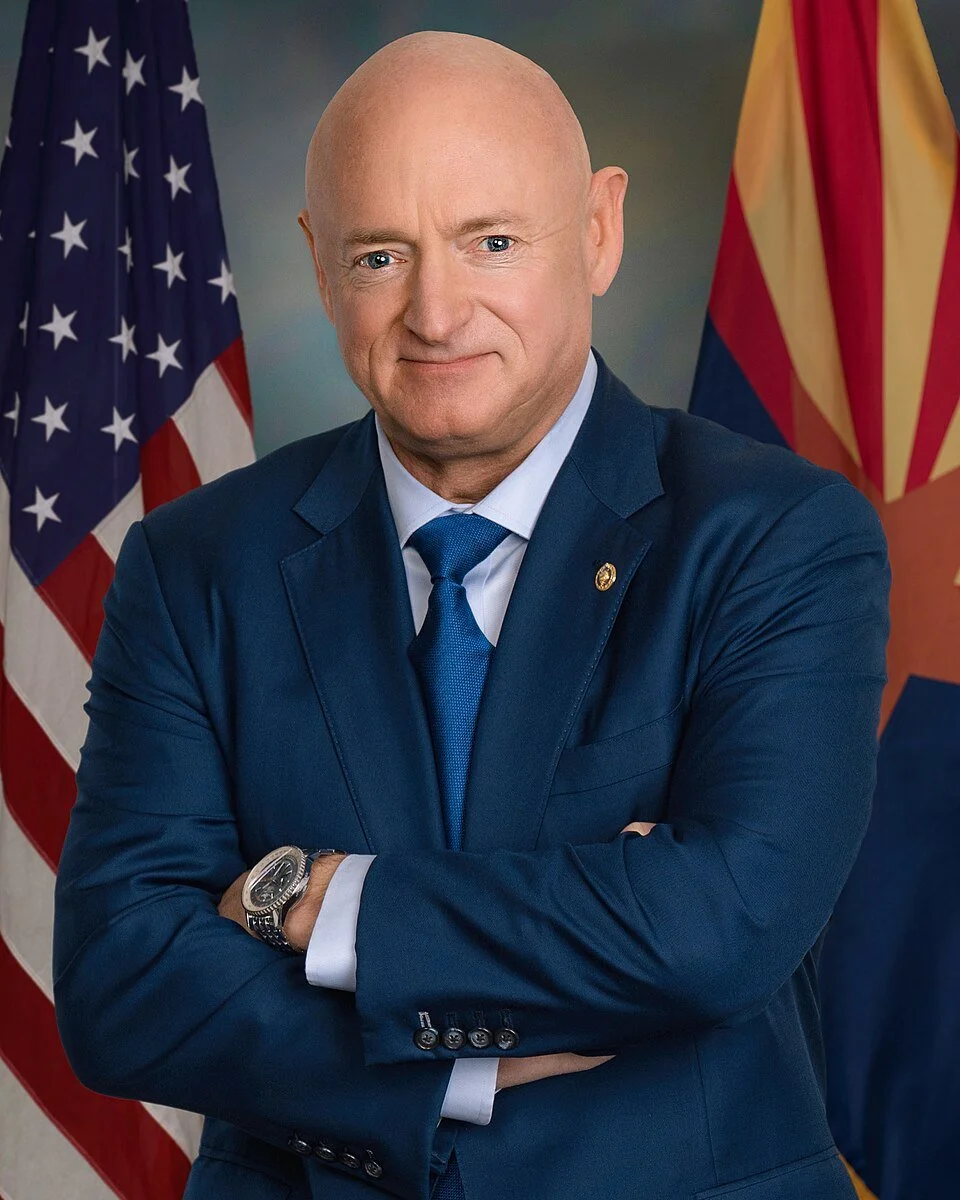
Mark Kelly
Senator Mark Kelly's career is a study in disciplined service and pragmatic focus. Before entering politics, his experience as a Navy combat pilot (flying 39 missions in the Gulf War) and a NASA astronaut (commanding Space Shuttle Endeavour on its final flight) instilled a methodical, calm, and mission-first approach that he carried directly into the Senate. This background fundamentally informs his political identity as a moderate, independent-minded Democrat from a critical swing state, Arizona.
Kelly's legislative record is heavily skewed toward tangible, non-ideological wins for Arizona, often secured through bipartisan negotiations:
Infrastructure and Manufacturing: He played a major role in shaping and passing the Bipartisan Infrastructure Law, securing billions of dollars for Arizona to repair roads, modernize ports of entry, and expand high-speed internet access to rural and tribal communities. Crucially, he was a key negotiator for the CHIPS and Science Act, which dedicates federal funds to boost domestic microchip manufacturing, directly supporting major investments and job creation by companies like TSMC and Intel in Arizona.
Water Security: As a senator for a drought-stricken state, Kelly has been a leader on Western water issues. He helped secure major funding within the infrastructure bill for water management, conservation strategies, and upgrades to aging water systems like dams and canals along the Colorado River, a lifeline for Arizona.
Healthcare and Costs: He worked across the aisle to help negotiate and pass a landmark deal that allows Medicare to negotiate lower prescription drug prices and caps out-of-pocket costs for seniors. He also successfully secured the ban on surprise medical billing.
Kelly's persona is defined by his calmness and detachment from partisan noise, echoing the cool competence required of an astronaut. This temperament has allowed him to stake out a truly independent position that benefits his state:
Border Security: On the sensitive issue of the Southern Border, he has consistently called the situation "a mess" and "chaos," and has criticized the Biden administration's handling of the issue. He advocates for investing in technology, staffing, and modernizing ports of entry, while working with Republicans on bipartisan legislation aimed at developing a coordinated response.
Accountability: He has championed ethics in government, including introducing legislation to ban members of Congress from trading stocks and being one of the few members to publicly post his official schedule to ensure transparency. He also rejects corporate PAC money.
Kelly's legislative success and moderate positioning—a result of his focused work ethic and commitment to his state's unique needs—cement his role as a crucial bipartisan figure in a deeply divided Senate, positioning him as an effective model for the pragmatic center in future politics.
-
![Picture of Pete Buttigieg]()
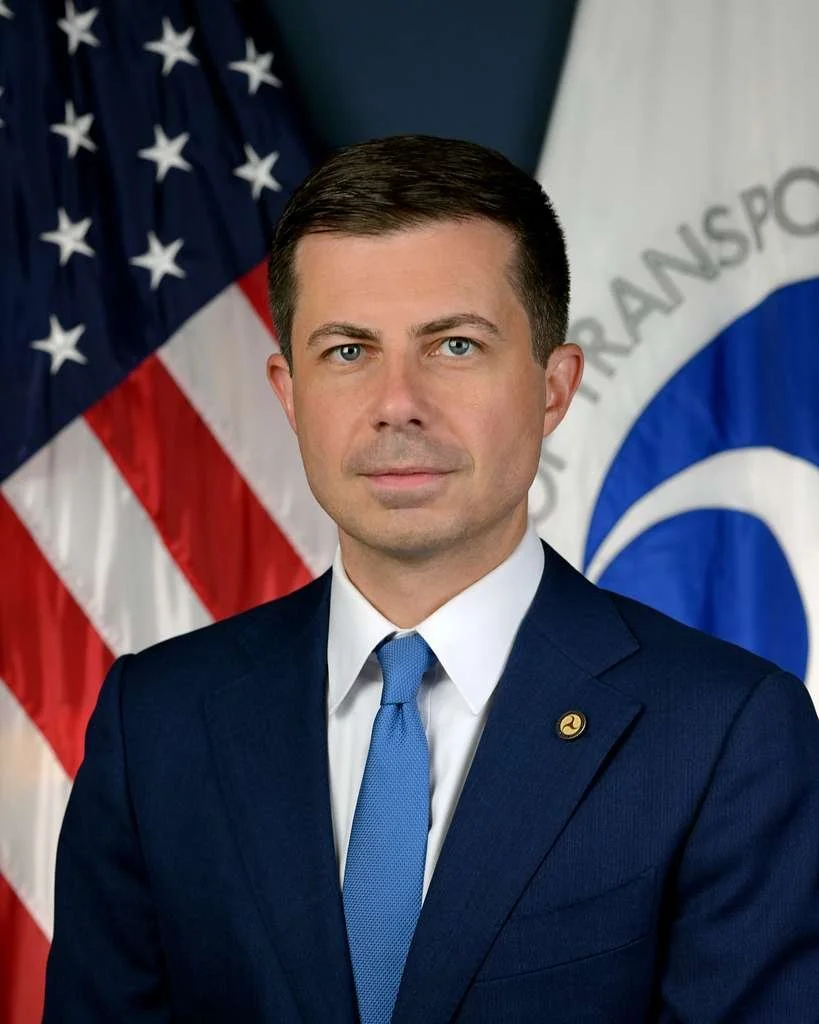
Pete Buttigieg
Pete Buttigieg's political career, marked by intelligence and a calm demeanor, positions him as a centrist Democrat and a compelling figure for the future. A Rhodes Scholar with degrees from Harvard and Oxford, Buttigieg first served as the mayor of South Bend, Indiana, where he led revitalization efforts like the "Smart Streets" initiative, earning a reputation as a pragmatic executive.
His distinguished military service as a Lieutenant in the U.S. Navy Reserve, including a deployment to Afghanistan as an intelligence officer, is a core part of his public image. This deep experience in national security, combined with his thoughtful, unflappable composure in often heated political settings, gives him an air of seasoned maturity and "cool" professionalism. He is often lauded for his ability to maintain dignity and focus on facts, refusing to be drawn into emotional political warfare.
Buttigieg’s moderate profile is reinforced by his bipartisan abilities. As U.S. Secretary of Transportation, he was a key figure in the implementation of the Bipartisan Infrastructure Law, a historic, cross-aisle legislative achievement. His work in the Cabinet involved distributing tens of billions of dollars for projects in red and blue states alike, demonstrating his focus on tangible, consensus-driven results—a style that bridges partisan divides and appeals to a public exhausted by polarization. As the first openly gay Cabinet member, Buttigieg also represents a significant step forward in American representation, embodying a modern, inclusive, and highly competent generation of leadership.
-
![Image of Abigail Spanberger]()
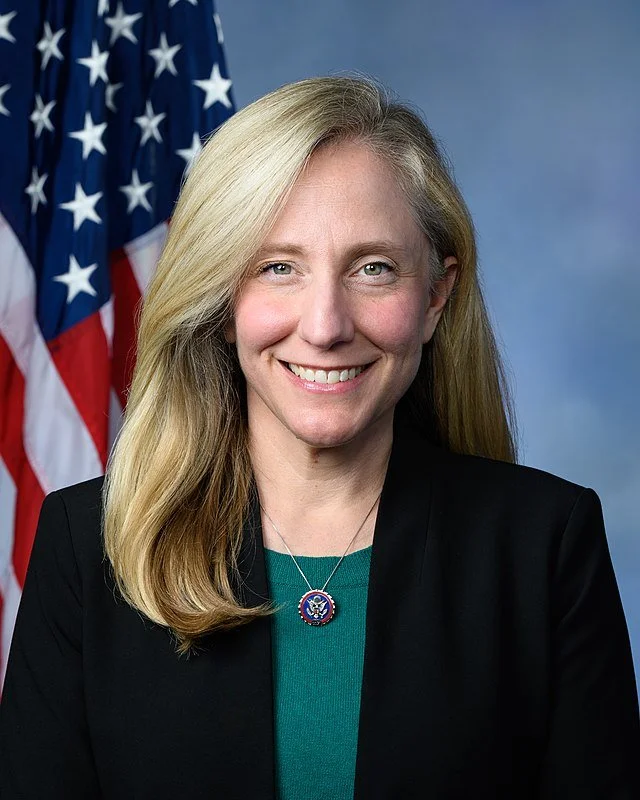
Abigail Spanberger
Abigail Spanberger's career path—from CIA operations officer to Democratic Congresswoman—defines her political identity as a pragmatic moderate focused on national security and results. Serving three terms in a highly competitive swing district in Virginia, Spanberger consistently demonstrated a calm, professional demeanor that stands in sharp contrast to polarized political rhetoric.
Her pre-political career, which included service at the U.S. Postal Inspection Service handling narcotics and money laundering, and over eight years as a CIA case officer gathering intelligence on counterterrorism and nuclear proliferation, gave her deep credibility on security matters. In Congress, she was noted for her bipartisanship, co-founding the Problem Solvers Caucus and earning national rankings as one of the most collaborative lawmakers.
Spanberger is the Democratic nominee in the Virginia Governor’s race on November 4. In the recent debate, she maintained her cool, as her opponent, Winsome Earle-Sears, repeatedly interrupted, ignored the moderators, and refused to allow Spanberger to answer the questions asked of her.
Spanberger is fiscally moderate—often opposing spending bills she deemed too broad, such as the initial HEROES Act—but progressive on social issues. She actively seeks solutions, as demonstrated by her work on the bipartisan Honoring Our PACT Act for veterans and her focus on lowering costs for working families. Her strength lies in her disciplined, no-nonsense approach, often referred to as "passionate pragmatism," which aims to deliver measurable policy solutions rather than engaging in partisan spectacle.